A scene from your world
Bringing her in
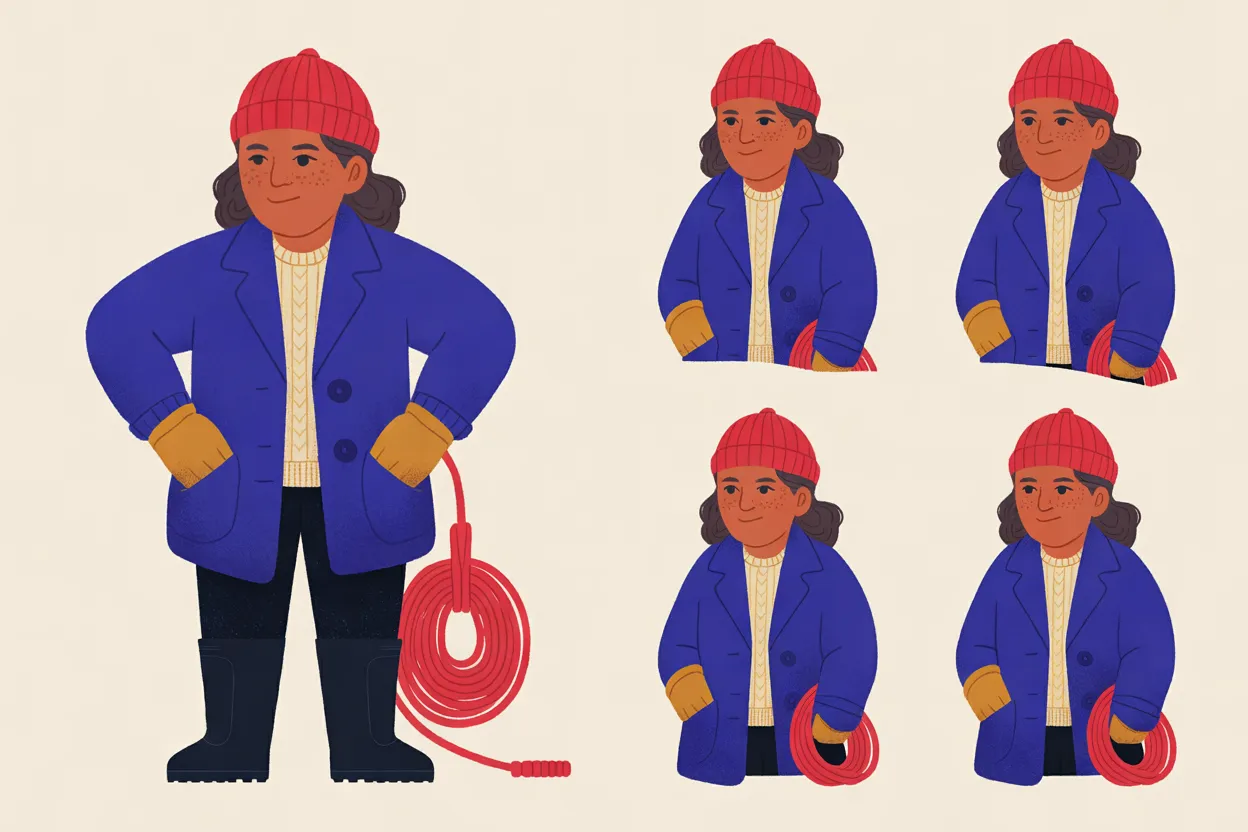
The Tug Captain is aboard before the harbor wakes. The engine catches on the first turn, the way it always does for her, and settles into a low knock she can feel through her boots. She singles up the lines, pours coffee into the dented mug that lives on the wheelhouse shelf, and backs the little red tug off its berth while the water is still the color of slate.
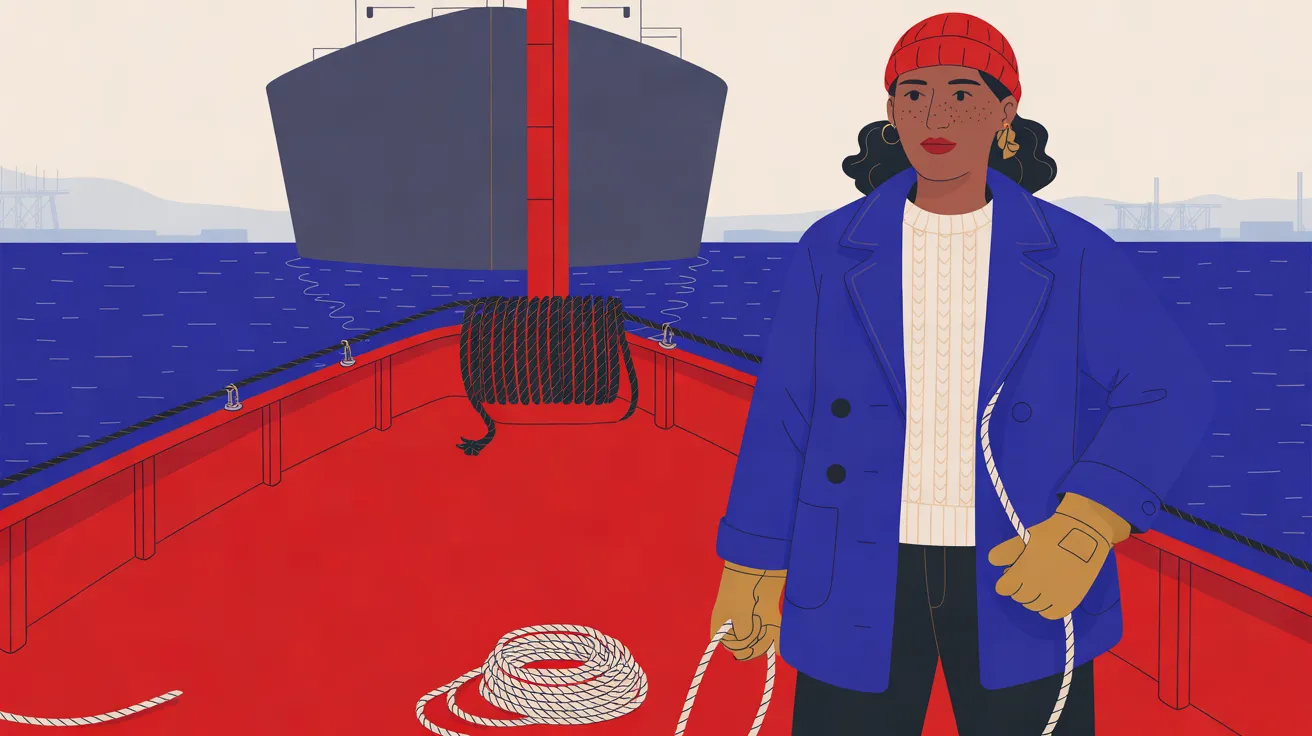
Outside the breakwater the ship is waiting exactly where the radio said it would be: a cargo ship as long as a street, dark-hulled and patient, riding at anchor with its lights still on. Beside it the tug looks like a toy somebody painted cherry red and forgot to put away. The Captain likes that. Big things should be brought in by small, stubborn things. That is her whole theory of the world.
She brings the tug around to the ship’s flank and lays the bow against it, the great black rope fender squeaking once against the steel. Then she leans. Not hard. Never hard. She eases the throttle forward a hair at a time, the engine knocking deeper, and holds there, and holds, and waits for the moment the ship stops being a wall and starts being a boat.
It comes the way it always comes: a shiver in the water, then a long, slow turn of the bow toward the harbor mouth. Gulls lift off the pilings and fall in behind, the same three that ride with her every morning, one of them settling on the fender as if it had paid for a ticket. The Captain talks to the ship the whole way in, under her breath. “There you go. Easy. Nobody’s in a hurry. That’s it.”
At the pier the line handlers are waiting in their gloves, stamping their feet against the cold. The ship slides the last ten yards as if it had meant to all along. The Captain steps out of the wheelhouse with the heaving line coiled in one hand, the knot at its end round and heavy as a fist, swings it twice and lets it go. It sails up over the gap and lands at the feet of the newest handler, a lanky young man in his first month on the pier, who catches it before it can roll.
He has missed every line she has thrown him for a week. He looks at the rope in his hands, then down at her, astonished. She gives him the nod she saves for people who have done a thing right, and he hauls the mooring line across as if he has done it all his life.
The ship is fast before the sun clears the hills. The Captain backs off, hangs the heaving line on its hook and finds the coffee still warm, which she takes as a good sign. Out past the breakwater another ship is turning off its lights. She swings the bow toward it.